

About
Preserving Our Heritage, Connecting Our Future
We are an all volunteer nonprofit organization dedicated to promoting the rich Scottish heritage and history of Clan Fraser. Our purpose is to serve as a bridge between ancestral history and the modern Scottish-American community. We actively host hospitality tents at Scottish games and festivals across North America, providing exclusive historical information and vital genealogical resources to our members. We also support historical projects like The Scots-Irish - A Musical Journey.
Meet Our Chiefs
Clan Fraser is not a single unified clan in the modern sense — it is actually two separate Scottish clans with common ancestry, each with its own chief and recognized by the Standing Council of Scottish Chiefs.
To learn more, click on the tab The Story of Clan Fraser above.

Frasers of Lovat
Simon Fraser
16th Lord Lovat

Frasers of Saltoun
Katharine Fraser
22nd Lady Saltoun
&
Alexander Fraser
Master of Saltoun
Deep Roots: The Story of Clan Fraser
Origins: The name Fraser traces its origins to the French provinces of Anjou and Normandy. Derived from the French word for strawberry (fraise), the Fraser coat of arms proudly displays silver strawberry flowers on a field of blue. Frasers first appeared in Scotland around 1160 when Simon Fraser gifted a church at Keith to the monks at Kelso Abbey.
The Early Highlanders: By the 12th and 13th centuries, the family moved into Tweedale, Stirling, Angus, Inverness, and Aberdeen. In 1306, Sir Simon Fraser (the Patriot) was executed by King Edward I after fighting valiantly for Robert the Bruce. His cousin's descendants would go on to form the two great branches of the Clan.
Frasers of Philorth - Lords Saltoun: The senior line descends from Sir Alexander Fraser, who fought at Bannockburn in 1314 and married Robert the Bruce’s sister. His seal appears on the legendary 1320 Declaration of Arbroath. In 1592, the 8th Laird of Philorth founded Fraserburgh. Today, the Chief of the Name of Fraser is Katharine Fraser, 22nd Lady Saltoun.
Frasers of Lovat - Lords Lovat: Descending from Sir Simon Fraser, this branch acquired lands in Stratherrick and Beauly Priory. Their history is marked by fierce loyalty and dramatic turns, including the 11th Lord Lovat ("The Fox"), the last nobleman beheaded on Tower Hill in 1747. Today, the Chief of the Clan Fraser of Lovat is Simon Fraser, 18th Lord Lovat and 25th MacShimi.
The Birth of CFSNA: The Clan Fraser Society of North America® (CFSNA®) was formed in July 1975 during the Grandfather Mountain Highland Games. Since that day, we have grown into the largest multinational Clan Fraser organization outside of Scotland, with dedicated representatives across numerous states and provinces.
CFSNA Officers & Directors
The dedicated volunteers keeping our heritage alive.
Officers & Directors

Chairman:
Juliane (Julie) Hegle
Vice Chairman:
Leslie Fraser-Bozek
Recording Secretary:
Susan Whitney
Membership Secretary:
Mary Lumpkin
Treasurer:
Michael Fraser
Roles
Editor, The Nessie:
Jim Oliver
Lead Facebook Administrator:
Terese Van House
Purchasing Agent:
Shaun Arnold
Web Administrator:
Juliane (Julie) Hegle
Society Genealogist:
Juliane (Julie) Hegle
Tartans and Heraldry

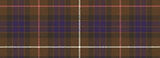
Modern Fraser Red Tartan

Fraser Hunting Tartan

Saltoun Heraldry

Lovat Heraldry

Saltoun Crest Badge
%20centered.png)
Lovat Crest Badge
The word “tartan” has various meanings. According to Merriam-Webster, “tartan” can mean a plaid textile of Scottish origin consisting of stripes of varying width and color usually patterned to designate a distinctive clan; a twilled woolen fabric with tartan design; a fabric with tartan design; or a garment of tartan design. This is not to be confused with the word “plaid” which comes from the Gaelic word for a blanket. The original kilt, which was known as the “belted plaid,” consisted of a length of cloth that was gathered and belted at the waist. The plaids in Scotland were typically made from a tartan cloth, which would have represented a particular Scottish clan or family.
The earliest known tartan in Scotland dates to about the third or fourth century AD. At that time, it is thought that a particular tartan design was not necessarily associated with one clan but rather reflected the materials and dyes available in the region. Today, an individual, family, clan or business organization can identify with a particular tartan design. Many clans, as is the case with Clan Fraser, have more than one clan tartan. For example, you will find a Clan Fraser hunting tartan, a dress tartan, a modern version of each, an ancient version of each, and more. Below you’ll see two of the more commonly used Clan Fraser tartans. A good place to learn more about tartans is www.scottishtartansmuseum.org.
Today we find that most Scottish tartan designs are registered to the individual, clan, family, or business organization. The Scottish Register of Tartans is charged with evaluating tartan designs and approving or denying their registration. One of the key factors is that the design should be distinctive and recognizable, with a clear pattern suitable for weaving. For more information about tartan registration, go to www.tartanregister.gov.uk.Merriam-Webster defines “heraldry” as the practice of devising, blazoning, and granting armorial insignia and of tracing and recording genealogies; or an armorial ensign or insignia. The use of heraldic symbols or “coats of arms” was used as a way to identify European nobility. The main way to display heraldry was on a shield. The use of a crest as well as the shield began in the 14th century. Traditionally, all male descendants of the first person to whom they were granted bear the arms.
Scottish heraldry is distinct from the rest of the United Kingdom in that it is governed by the Lord Lyon King of Arms, which dates back to about 1318 during the reign of Robert the Bruce. The Lord Lyon’s responsibilities include granting arms, adjudicating genealogical claims, and determining clan chiefships and family representation.
In Scotland, a coat of arms belongs to an individual, not a family. Junio members of a family must differentiate their arms from the chief’s. The public registry of coats of arms is maintained by the Public Register of All Arms and Bearings in Scotland. You can learn more about the Lord Lyon King of Arms and registration of coats of arms at www.scotlandspeople.gov.uk.Scottish clans use crest badges to signify allegiance to a clan or chief. As in the case of Clan Fraser, individuals with direct descendance from Clan Fraser or those descended through one of its septs are allowed to use the crest badge of the clan or clan branch that they identify with. A crest badge consists of a heraldic crest encircled by a strap and buckle containing the chief’s motto. In the case of Clan Fraser, with its two clan chiefs or branches of Clan Fraser, one would choose the crest badge of the Frasers of Saltoun or of the Frasers of Lovat, depending upon the lineage or affiliation.
In modern times, the specific design of the crest badge can utilize some creative license, as long as it also follows the traditions of crest badges. The design should always be based on the circular belt with buckle at the eight o’clock position and the termination of the belt end draped downward at the six clock position. The belt surrounds the heraldic crest. The clan name may be represented below the circular belt image, but more often is not included in the design. The clan chief’s motto is inscribed on the top of the belt and preferably around the 12 o’clock position. If the heraldic design extends over the image of the belt, the motto can be split so that part of the motto is on one side of the heraldic design and part on the other. The two Clan Fraser crest badges are a good representation of a heraldic design that overlaps the top of the belt (Lovat) and one that does not (Saltoun).
Clan Fraser Society of North America®, as a clan society that represents both branches of Clan Fraser, displays both the Saltoun and the Lovat badges. Society members who can trace their ancestry to one branch or the other may choose to use only that badge crest. You may find more information about clan badges at www.scotsclans.com.

Society members contribute in a variety of ways to enhance the breadth, depth, and accuracy of stories of Scottish history. Our members have shared their family history research with researchers and historians, which has led to numerous discoveries of the connections of the Scots to the formation of Scotland as it is today and of early America.

We invite you to join us in supporting a groundbreaking PBS and U.K./Ireland television film "The Scots-Irish -- A Musical Journey." Award-winning filmmakers Chris Moser and David Hughes Duke present the story of the cultural legacy of the Ulster-Scots in both Scotland and the Americas. Please consider donating for the U.S. filming HERE.

For nearly 250 years, the Society of Antiquaries has been actively supporting the study and enjoyment of Scotland's past through archeological and historical research, and seeks funding for a new state-of-the art facility. Perhaps you will make your own discovery through the Society. Join us in supporting this initiative. For more information CLICK HERE.

The Society supports the First Coast Highlanders, an all-volunteer Scottish bagpipe and drum band based in Clay County, Florida, dedicated to performance, education, and promoting Celtic culture. The band will travel to Scotland in 2027. Please contact us if you'd like to support this amazing Scottish band.

We proudly support Eric Frasure, who was named Overall Winner in Men's Athletics at the 2025 Grandfather Mountain Highland Games. Eric will be competing at the 2026 Masters World Championships in The Netherlands. If you'd like to contribute to Eric's journey, please contact us.
Our Initiatives
A Continent Connected: The CFSNA® Regions
We are proud to have members spanning across the United States and Canada. To ensure our community remains closely connected at a local level, the CFSNA® Bylaws establish five distinct geographical regions. When you join our society, you are thoughtfully assigned to a Regional Commissioner dedicated to your area.
Below is a map of our five regions. If you wish to contact a Regional Commissioner in your area, please scroll below the map to find the direct contact links for each territory.
Regional Commissioners:
-
Northwest Commissioner Garth Fraser
-
Midwest Commissioner Terese Van Hout
-
Northeast Commissioner Charlie Frasier
-
Southeast Commissioner Ben Fraser
-
Southwest Commissioner Leslie Frazer-Bozek

gallery


